Showing posts with label of. Show all posts
Showing posts with label of. Show all posts
Tuesday, March 3, 2015
Was The DNA of a 21st Century Educator Plagiarised in China

Source
This Article in other formats:
- Scribd
- SlideShare
DISCOVERY
The last time I looked in a mirror, I certainly didnt look like that! However, the DNA slide looks familiar. Oops, it looks like a slide from my DNA of a 21st Century Educator (Version 2) presentation. Awesome! Someone in China has translated my slide, and is sharing it with a group of local and international educators attending a conference (or seminar) exploring the future of education at the Luoyang International School (17 Oct, 2012). Here is another picture that reveals a bit more about this event: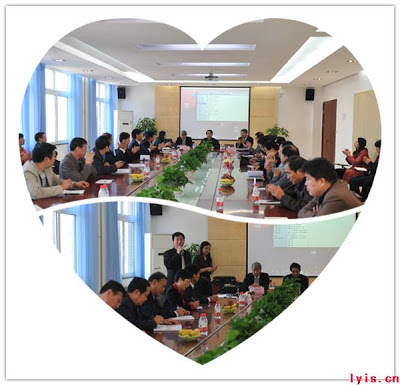
Source
So, whats the problem here?
THE STORY
Yesterday evening (9 Jan, 2013), I got an e-mail from my Norwegian (online) buddy Stian Håklev (Co-founder of Peer2Peer University) informing me...
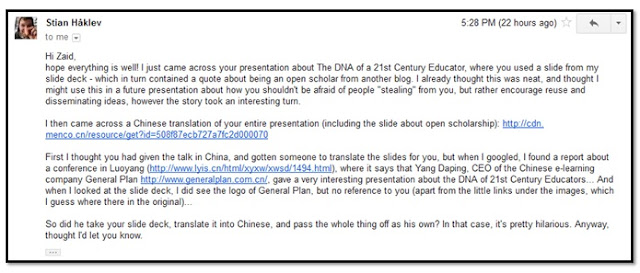
Important Links:
- Chinese Translation of my presentation
- Report about the conference (Luoyang International School)
- Company: General Plan
(Should the links above be deleted for some reason, please click here to view the presentation and report saved to Dropbox)
WOW! Thanks, Stian for sharing this Pretty Hilarious news with a CSI kind of reporting of the event. Initially, I thought this whole thing was really cool, and I was kind of thrilled that someone would actually go to such lengths to reuse and translate slides that originated from me (WOW, the slides must be really good!).
I have heard and read that translated plagiarism is a BIG BIG BIG PROBLEM in China, but not in my wildest dreams did I anticipate it would happen to me. Certainly, not like this.
Lets break down the case.
THE CASE
I first gave the DNA of a 21st Century Educator talk during the Annual Teaching and Learning Seminar 2012" at USM on the 26 June, 2012. However, the slides that have been reused and translated are from the second version, which was published 19 July (2012) on SlidesShare. Here is my original version:
Since, the Chinese version was presented on the 17 October (2012), we can presume based on existing evidence that I am more likely the author.
DNA of a 21st Century Educator (v2) from Zaid Alsagoff
Since, the Chinese version was presented on the 17 October (2012), we can presume based on existing evidence that I am more likely the author.
Also, based on the time between both these events (19 July - 17 October), Mr. Copytran (Code name for the author(s) of the Chinese version) had more than sufficient time to translate the presentation slides to Chinese.
The English version has 81 slides compared to 28 slides for the Chinese version. Interestingly, 26 (out of 28) or 92.85% of the Chinese version seems to be visually similar compared to the English version. However, we have to give credit to some critical thinking taking place here, as the 26 slides have been filtered (from 81), shuffled and organized a bit differently compared to the English version.
Moreover, unless Mr. Copytran used only Google translate (or outsourced the translation), he/she/it/they must have spent considerable time to translate these 26 slides, which I assume requires masterful language ability. Though, since my Chinese is practically zero, I would need some expert to verify this.
Also, we have to give credit to Mr. Copytran for showing amazing ability to manipulate, redesign and delete important aspects of the 26 slides that will be revealed one-by-one next.
SLIDE-BY-SLIDE
Here we go:

Yes, the DNA word has moved from one side to the other (Originality?). Also, the Creative Commons (CC BY-NC-SA 3.0) license has simply vanished from all 26 slides. Also, you notice that the IMU logo(s) are no longer there.
Interestingly (red arrow), the General Plan logo appears for the first time. As we explore these slides, you will notice that this logo will appear, disappear and even move during its journey over 26 slides. I assume the General Plan logo is suffering from some kind of appearance disorder (perhaps feeling guilty, or perhaps wanting to be associated with important slides and points).
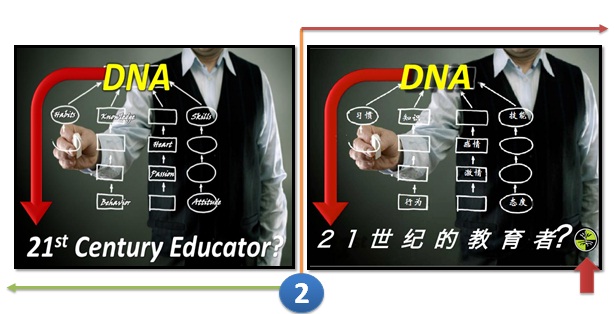
You notice the logo has repositioned itself on slide 2, as if it is the solution to the question (Say no more!). Besides the translations, not much more to say. Awesome slide, though!
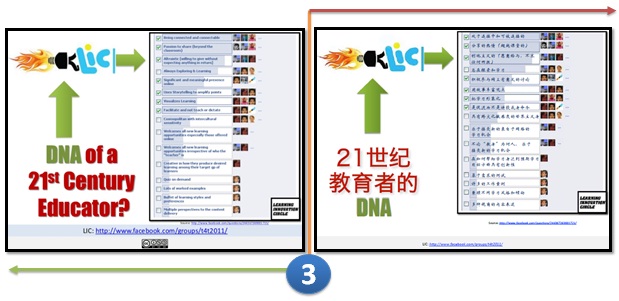
I cant believe that the LIC Facebook poll slide, identifying what (a few) members of this group think are the ingredients of a 21st Century educator was translated. Mr. Copytran please explain; "Why did you include this one?"
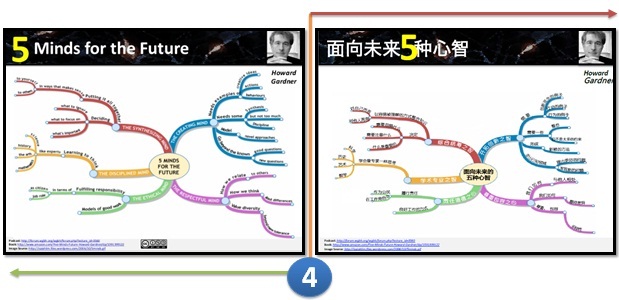
Kudos! I mean, I just reused a stunning mind map explaining Howard Gardners 5 Minds for the Future. Mr. Copytran on the other hand, must have spent considerable time translating and manipulating the image. Also, he didnt delete the links (URLs) to the relevant resources, which is good. Though, if he did, surely someone would question Mr. Copytran how he managed to visualize the mind map so nicely.

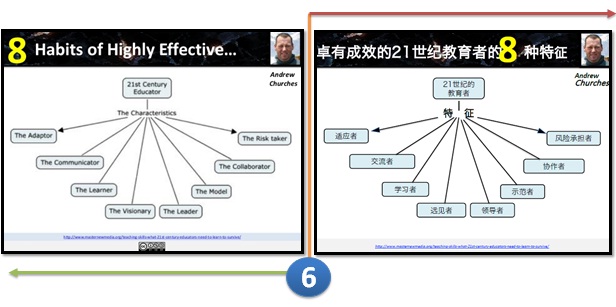
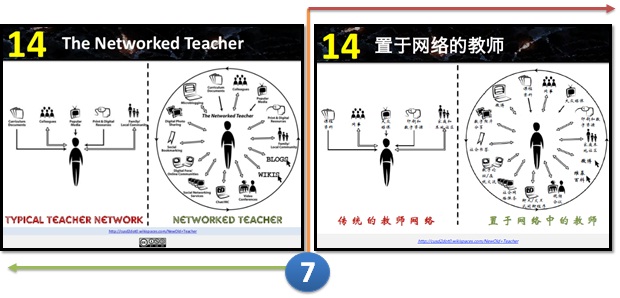
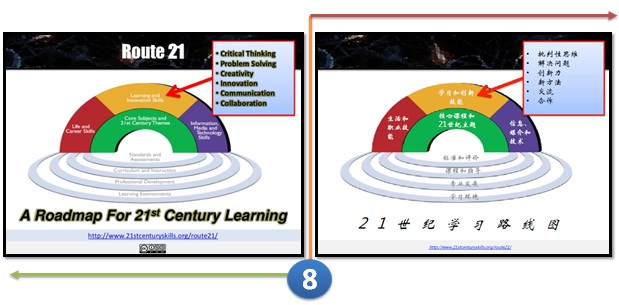

Oops, I mashed up that graphic in 2009 (Evidence) based on Lucifer Chus wise words during his Keynote at the 2nd International Conference of e-Learning hosted by UiTM (ICEL 2009). So, Mr. Copytran, how did you develop this graphic? You certainly dont have any reference links to support your case, if you didnt develop it.
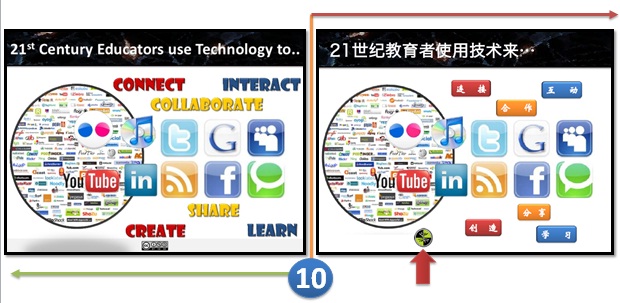
Notice that the logo has reappeared and moved strategically beyond my comprehension to a new location. No doubt, my original slide looks better, right?
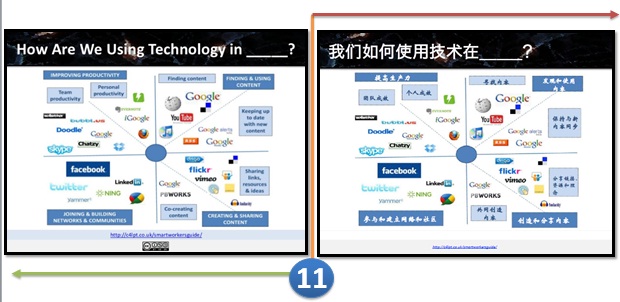
Jane Hart, congratulations for getting your slide translated!
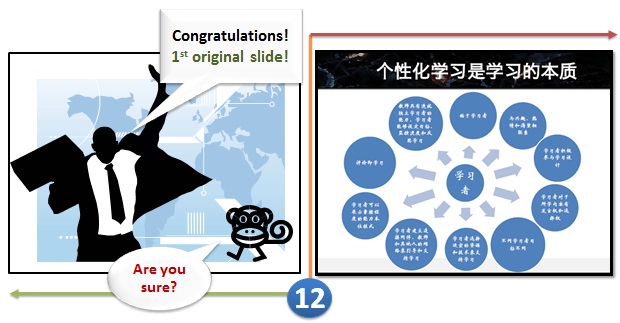
WOW! Historic moment! Could this be a break through?
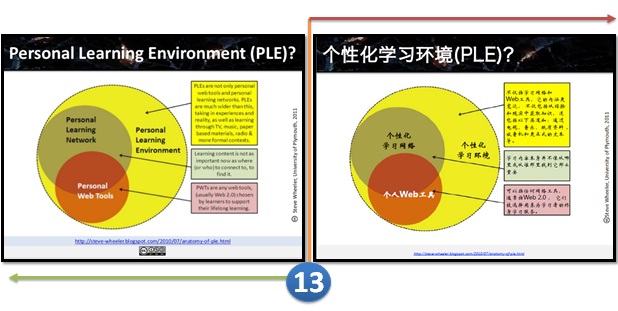
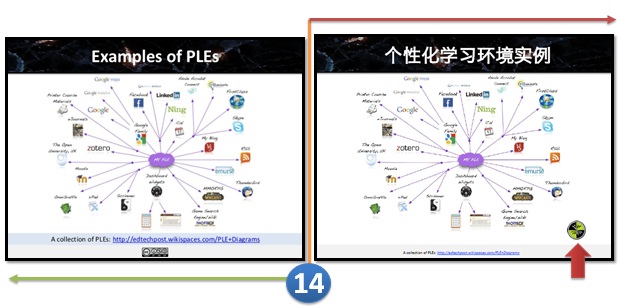
Now, the logo appears again and has amazingly moved again, too. It is as if the logo is playing a hide-and-seek game with us. Correct me if I am wrong!
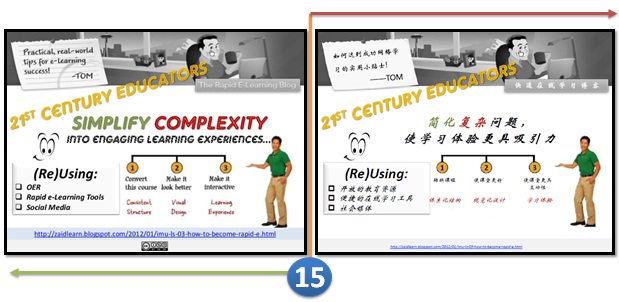
I was really happy with this mash-up of mine, and Yes Mr. Copytran does provide a link to my blog post, so thanks for the reference. It is nice to reference our own work, but even better when others reference our own reference. What do you think?

Prof. Rozhan, congrats! Now, your 3-dimensial Technogogy diagram has been translated and hopefully it will be explored further in China.
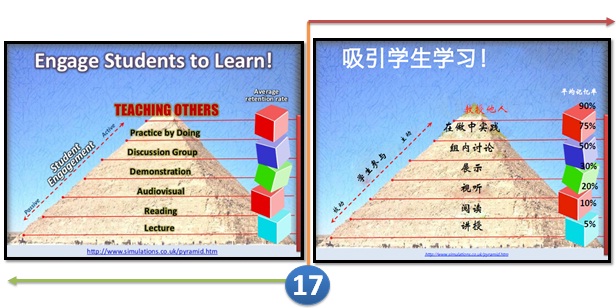
Mr. Copytran, not a bad translated copy of the original one. What software do you use to edit graphics?
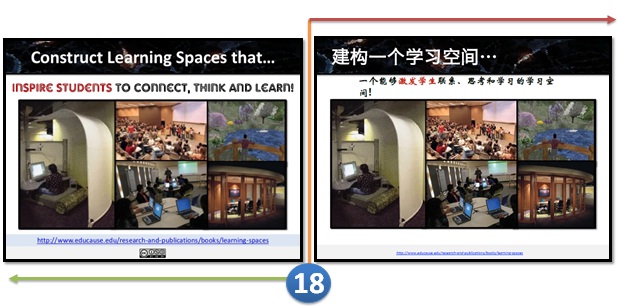
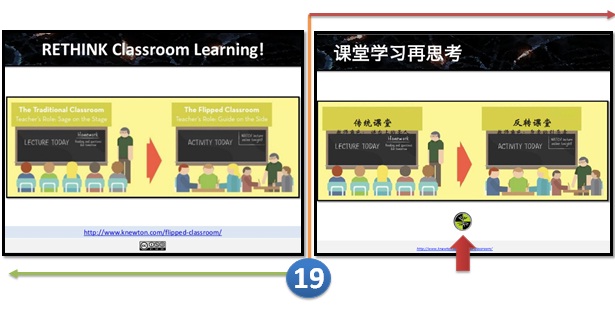
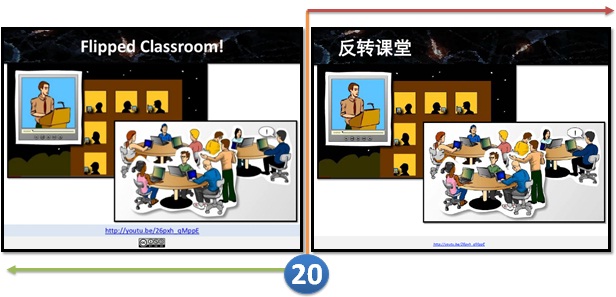
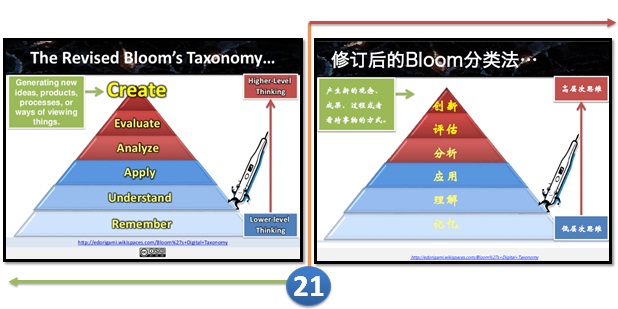
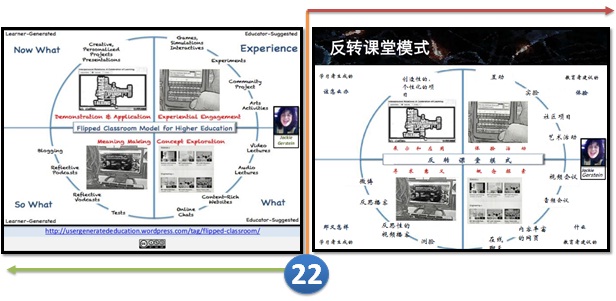
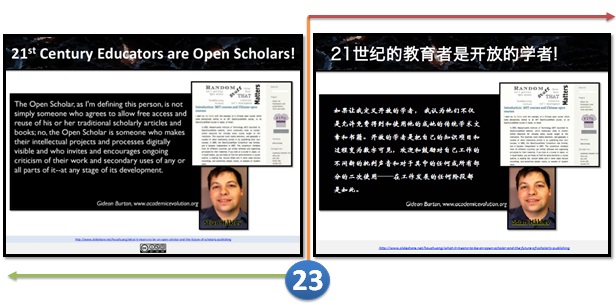
Thanks for including this slide, because this is the one that enlightened Stian Håklev to discover the rest.
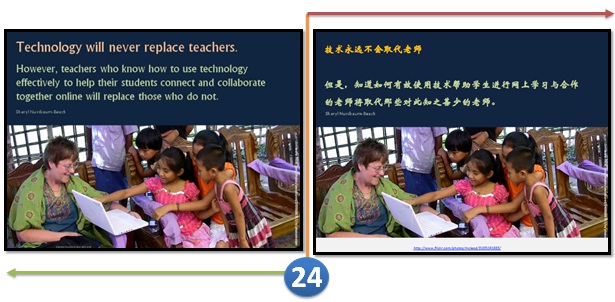
No comment!
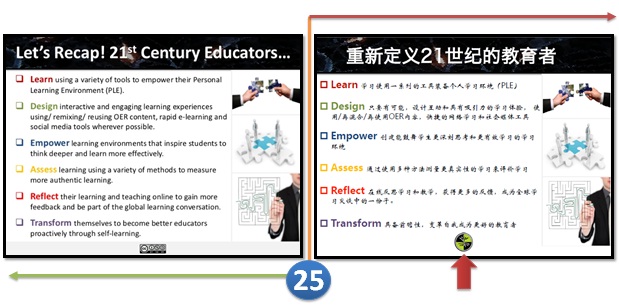
This is where I draw the line. Where is your reference to my Recap? Also, why is the logo suddenly appearing again? At least this time it appears the same place as the last time.
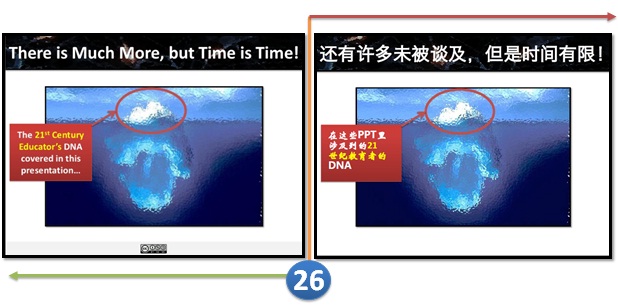
Of course there is much more, Mr. Copytran you still have another 55 potential slides (81 - 26 = 55) to translate. LOL!

I just cant believe that you cant even create your own Q&A slide! Take a risk and use your imagination a bit. Come on! Is that too much to ask for?
Is this a case of Plagiarism? Please share your views.
MY CASE VERDICT
Seriously, Mr. Copytran you must have spent hours translating and manipulating this presentation to meet your desired goals. We should be celebrating your effort for all your hard work? However, that might not be the case, especially if this story goes viral in a negative sense. Maybe, in your mind you didnt do anything wrong, and just maybe you had every right to do what you did.
I am actually not bothered by you reusing the 26 slides from my presentation (That is why I share!), but I am angry and irritated based on the observations shared above that you seem to have deliberately plagiarized some of my content, ideas and recommendations, without giving any form of recognition for it. Also, when I read the Google translated version of the conference report, my ego of any doubt vanished (like the CC license did in your slides).
Didnt you realize that the DNA of a 21st Century Educator (version 2) presentation has been viewed more than 31,000+ times by now? Actually, by day 3 or 4 (after publishing it on SlideShare - 19 July) it had already been viewed more than 15,000+ times (was featured as Top Presentations of the day), and cited by numerous of bloggers and educators around the world through varies social media tools (Facebook, Twitter, Google+, blog posts, etc).
More importantly, didnt you realize that this presentation has been published under a Creative Commons license (Attribution - NonCommercial - ShareAlike or CC BY-NC-SA) empowering anyone for free to reuse and remix for non-commercial reasons with attribution. Most of my learning articles, presentations and artifacts since 2008 have been published with such a license, and hundreds of educators around the world have been reusing or remixing them as they like (with attribution), and that is one major reason why I love to share.
However, when a person representing a corporate e-Learning company (General Plan) literally takes my presentation (or 26 slides from it), and presents it at a conference (translated version) without giving any credit (at least on the slides). And then has the cheekiness to put his company logo, and even delete the Creative Commons license from all the 26 slides translated, is something that I find really unacceptable.
It might be flattery (to some), but it is also totally against any principles of professionalism (that I know of).
The best way (in my opinion) to deal with people with such integrity and professionalism is to expose them to the world and remind others that doing such things are not worth the risk.
More importantly, didnt you realize that this presentation has been published under a Creative Commons license (Attribution - NonCommercial - ShareAlike or CC BY-NC-SA) empowering anyone for free to reuse and remix for non-commercial reasons with attribution. Most of my learning articles, presentations and artifacts since 2008 have been published with such a license, and hundreds of educators around the world have been reusing or remixing them as they like (with attribution), and that is one major reason why I love to share.
However, when a person representing a corporate e-Learning company (General Plan) literally takes my presentation (or 26 slides from it), and presents it at a conference (translated version) without giving any credit (at least on the slides). And then has the cheekiness to put his company logo, and even delete the Creative Commons license from all the 26 slides translated, is something that I find really unacceptable.
It might be flattery (to some), but it is also totally against any principles of professionalism (that I know of).
The best way (in my opinion) to deal with people with such integrity and professionalism is to expose them to the world and remind others that doing such things are not worth the risk.
I can go on, but then again perhaps Mr. Copytran did no wrong.
In the 21st century you can easily copy or plagiarize, but you can easily get caught, too. And you certainly cant hide online for that long! That is for sure!
Why potentially waste your career and credibility just for one presentation?
What were you thinking?

Friday, February 27, 2015
The Vanishing Art of Lecturing Prof K Ramnarayan

PURPOSE OF A LECTURE?
- Inspire
- Influence
- Inform
On the 24th May 2010, Prof. K. Ramnarayan (Vice Chancellor of Manipal University) conducted an inspiring lecture entitled The Vanishing Art of Lecturing at the International Medical University (IMU), Bukit Jalil (Main Campus).
To cut the story short, lets enjoy and reflect this amazing and inspiring lecture below, chunked into three (3) parts:
PART I
PART II
PART III
To summarize in his own words, lectures should be:
Lively
Educative
Creative
Thought (provoking)
Understandable
Relevant
Enjoyable
Lets scrutinize and reflect his lecture a couple of times (or more), and then ask ourselves, "How can I be more inspiring uncovering what I am covering in a more exciting manner..."
Click here, to discover and enjoy IMUs inspiring e-Learning stream on Facebook :)

Wednesday, February 25, 2015
How to Load the Full Version of a Website on your iPad Smartphone!
I remember the days when my iPad automatically loaded the full version of a website... then I upgraded to IOS6 and all of a sudden the whole internet thought my iPad was a mobile device... yikes!!!
Unfortunately, theres no magic setting to switch the iPad back to the way it was before the update, but there are lots of ways you can load the full version of a website on your iPad!

Heres the poll for those of you keeping track! And, for those of you who havent been able to vote from your iPad/smartphone, do this tutorial now to load the poll so you can vote for next week! :)

There are three different options that you can use to load the full version of the site... and here they are!


Read more »
Unfortunately, theres no magic setting to switch the iPad back to the way it was before the update, but there are lots of ways you can load the full version of a website on your iPad!
Heres the poll for those of you keeping track! And, for those of you who havent been able to vote from your iPad/smartphone, do this tutorial now to load the poll so you can vote for next week! :)
There are three different options that you can use to load the full version of the site... and here they are!
You can download this tutorial as a PDF by clicking this picture!
Note: This tutorial is hosted on Google Docs. To save it from there, just open the file and click File > Download to save onto your computer!
For next weeks poll, Im going to add another iPad tutorial: how to take a screenshot on your iPad/iPhone... something that was necessary for me to write this weeks tutorial!
Tuesday, February 17, 2015
C Program and Algorithm for Conversion of an Expression from Infix to Postfix
In infix notation or expression operators are written in between the operands while in postfix notation every operator follows all of its operands.
6. If a right parenthesis is encountered, then

Example:
Infix Expression: 5+3*2
Postfix Expression: 5 3 2*+.
Algorithm for Conversion of an Expression from Infix to Postfix
Let Q be any infix expression and we have to convert it to postfix expression P. For this the following procedure will be followed.
1. Push left parenthesis onto STACK and add right parenthesis at the end of Q.
2. Scan Q from left to right and repeat step 3 to 6 for each element of Q until the STACK is empty.
3. If an operand is encountered add it to P.
4. If a left parenthesis is encountered push it onto the STACK.
5. If an operator is encountered, then
- Repeatedly pop from STACK and add to P each operator which has same precedence as or higher precedence than the operator encountered.
- Push the encountered operator onto the STACK.
6. If a right parenthesis is encountered, then
- Repeatedly pop from the STACK and add to P each operator until a left parenthesis is encountered.
- Remove the left parenthesis; do not add it to P.
7. Exit
Also Read: C Program and Algorithm for Evaluation of a Postfix Expression
Also Read: What is Quick Sort? Algorithm and C Program to Implement Quick Sort
An example of converting infix expression into postfix form, showing stack status after every step is given below. Here RPN stands for reverse polish notation (postfix notation).
C Program for Conversion of an Expression from Infix to Postfix
// Operator supported: +,-,*,/,%,^,(,)
// Operands supported: all single character operands
#include<stdio.h>
#include<conio.h>
#include<ctype.h>
#define MAX 50
typedef struct stack
{
int data[MAX];
int top;
}stack;
int precedence(char);
void init(stack *);
int empty(stack *);
int full(stack *);
int pop(stack *);
void push(stack *,int);
int top(stack *); //value of the top element
void infix_to_postfix(char infix[],char postfix[]);
void main()
{
char infix[30],postfix[30];
printf("Enter an infix expression(eg: 5+2*4): ");
gets(infix);
infix_to_postfix(infix,postfix);
printf("
Postfix expression: %s",postfix);
Postfix expression: %s",postfix);
}
void infix_to_postfix(char infix[],char postfix[])
{
stack s;
char x,token;
int i,j; //i-index of infix,j-index of postfix
init(&s);
j=0;
for(i=0;infix[i]!=
Read more »
Saturday, February 14, 2015
C program to swap values of two variables using pass by reference method
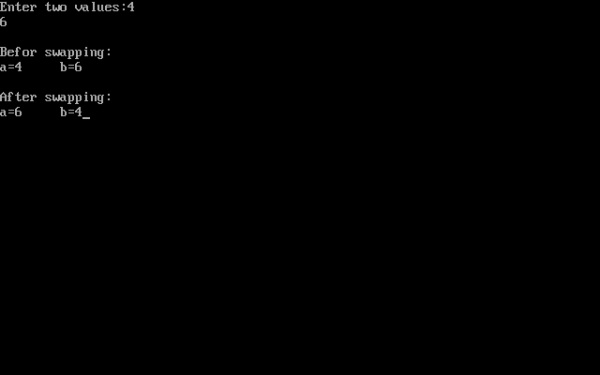
#include<iostream.h>
#include<conio.h>
void main()
{
clrscr();
int a,b;
void swap(int &,int &);
cout<<"Enter two values:";
cin>>a>>b;
cout<<"
Befor swapping:
a="<<a<<" b="<<b;
swap(a,b);
cout<<"
After swapping:
a="<<a<<" b="<<b;
getch();
}
void swap(int & x,int & y)
{
int temp;
temp=x;
x=y;
y=temp;
}
Wednesday, February 11, 2015
C program to find the sum of the series x x 2 2 x 3 3 x n n
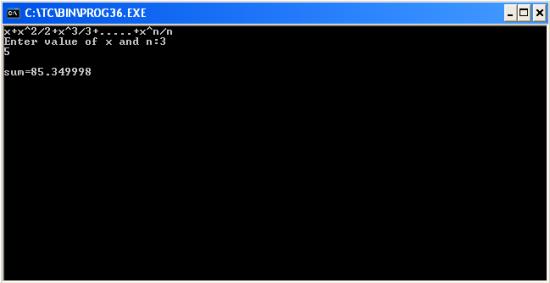
#include<stdio.h>
#include<conio.h>
#include<math.h>
void main()
{
int i,n;
float x,sum=0;
clrscr(); //to clear the screen
printf("x+x^2/2+x^3/3+.....+x^n/n");
printf("
Enter value of x and n:");
scanf("%f%d",&x,&n);
for(i=1;i<=n;++i)
sum+=pow(x,i)/i;
printf("
sum=%f",sum);
getch(); //to stop the screen
}
Tuesday, January 20, 2015
PowerPoint presentations a new way of showcasing your resume
If you believe that document(Doc) and PDF is the only way of sharing your resume online then you are totally wrong. More and more people are now using PowerPoint presentations for creating their CV. Resume on a PowerPoint presentation not only lists your experience and academic skills but also show your creative and innovative thinking. Have a look on some quality resumes below:
Do you think that any employer would not like to call such candidate for an interview? Share your thoughts through comments?
Read more »
My Visual Resume
Uploaded on authorSTREAM by venkoos | Upload your own presentation

Anthonys PowerPoint Resume
View more presentations from Career Corps.
Do you think that any employer would not like to call such candidate for an interview? Share your thoughts through comments?
Monday, January 19, 2015
Preloading External SWF File Generates Error 1009 Cannot access a property or method of a null object reference
Exercise Files:
Stage_Issue_Preloader.fla
Stage_Issue_Load_This.fla
When youre preloading a SWF file that has code that makes any reference to the stage, you might encounter this error:
TypeError: Error #1009: Cannot access a property or method of a null object reference.
Lets take a look at the sample files and see if well get that same error. Make sure that youve downloaded them and placed them in the same folder. We have 2 files:
Lets open the Stage_Issue_Load_This.fla file first. Go ahead and test the movie so that Flash will generate a SWF file inside the same folder that contains our Flash documents. What happens in this movie is when you hit the enter key on your keyboard, the smiley face in the center of the stage will rotate. Try it out, but make sure that you disable keyboard shortcuts by going to Control > Disable Keyboard Shortcuts. What the movie does is not really important. Whats important here is that if you take a look at the code in frame 1 of the Actions layer, you will see a reference to the stage at the beginning of the code:
Open the Stage_Issue_Preloader.fla file. Check the code on frame 1 of the Actions layer and you will see that we already have our basic preloader code that will preload the Stage_Issue_Load_This.swf file. Now test the movie and you should see that same error message I mentioned at the beginning of this article:
TypeError: Error #1009: Cannot access a property or method of a null object reference.
This error mentions a null object. When you say null object, it means that the object has no value and, in a way, is kind of like a non-existent object. And the null object being referred to here is actually the stage.
But how can the stage be null? Isnt there already a stage when the preloader file is launched?
Yes. But the problem is that stage can only be accessed from a display object thats already in the display list. Our stage reference (the line that says stage.addEventListener(KeyboardEvent.KEY_DOWN, rotateSmileys);) is inside the Stage_Issue_Load_This.swf file. Thats the file thats being preloaded, and it wont get added to the display list until it has loaded completely. So essentially, this means that for a certain amount of time while its being loaded, it actually wont have a stage. So thats why stage is being seen as null. You see, when youre loading an external SWF file in Flash, it can actually start reading the code inside that SWF file even though it hasnt completely loaded yet. So in this circumstance, what happens is that the external SWF file hasnt been completely loaded yet, but Flash is already trying to execute the code inside it. So its trying to execute the stage.addEventListener... line, but as weve learned, the external SWF file does not have a stage yet. But once its been loaded completely and has been added to the display list, then the stage reference inside the Stage_Issue_Load_This.swf file will no longer be null.
So how do we fix this?
Well take a look at 3 ways in which we can fix this issue. Basically, what we want to do is to make sure that stage is not null when the stage.addEventListener... line gets executed.
Method #1
For the first method, we will be adding some code to the Stage_Issue_Load_This.fla file (thats the file thats going to be preloaded). So make sure that file is open, then select frame 1 of the Actions layer and then go to the Actions panel. What well do is we will add an event handler that will tell us when the Flash movie has been added to the stage. The event for that is Event.ADDED_TO_STAGE. This event gets dispatched by the display object whenever its been added to the stage. So when our Flash movie gets added to the stage, only then will we let Flash execute the stage.addEventListener... line. So well create an Event.ADDED_TO_STAGE event handler, and then place the stage.addEventListener... line inside the event listener function associated with that event handler.
*Make sure that you test this movie first in order to generate the SWF file with the updated code before you test it with the preloader movie.
The problem with this method, though, is that the movie wont work properly if you run it by itself (meaning when you dont load it using the preloader file). When you run the Flash movie by itself, then the Event.ADDED_TO_STAGE event never gets dispatched. So the stage.addEventListener... line never gets executed. The Event.ADDED_TO_STAGE event doesnt get dispatched because when you run the Flash movie by itself, it never adds itself to its own stage. It has to be loaded by another Flash movie and then be added to that Flash movies stage, in order for the Event.ADDED_TO_STAGE event to be dispatched. So lets go ahead and take a look at other methods as well.
Method #2
For this second method, we will be adding some code to the Stage_Issue_Load_This.fla file as well (thats the file thats going to be preloaded). So make sure that file is open, then select frame 1 of the Actions layer and then go to the Actions panel. What well do is we will add some sort of checker that will check whether stage is not equal to null (if stage is not equal to null, then this means that our external SWF file already has a stage). If the stage is still null, then dont execute the code. But if the stage is no longer null, then Flash can go ahead and execute the stage.addEventListener... line. So lets take that stage.addEventListener... line and put it in an if statement that checks if stage is not equal to null.
But this is not quite complete yet. This if statement will only run once. We want it to keep running so that its going to keep on checking until stage is no longer equal to null. And one way of making this if statement execute numerous times would be to put it in an ENTER_FRAME event handler.
And also, lets not forget to remove the ENTER_FRAME event listener once stage is no longer null, since by that time, we no longer need to check for that condition. If we dont remove the listener then it will keep on running and needlessly take up computing resources.
Method #3
In this third method, the code will be added to the Stage_Issue_Preloader.fla file instead. This fix is much shorter. Youll only need to transfer an already existing line to the top part of the code. But before we add the code, lets take a quick look at how a loader object works:
When an external SWF file is loaded by a loader object, the SWF file gets loaded as a child of the loader object. This is another way of saying that the external SWF file actually goes inside the loader. Once loading is complete, we can then add the loader to the stage. And since the loaded SWF file is inside the loader, then the SWF file gets added to the stage along with it. Just keep that in mind as the fix in this method has something to do with that.
So now, lets go ahead and edit the code. Make sure that the Stage_Issue_Preloader.fla file is open, then select frame 1 of the Actions layer and then go to the Actions panel. Scroll down until you see the function named loaded.
So why do we need to add the loader before we start the loading process? Well, because if the loader is already on the stage, it means that the externally loaded SWF file gets added to the stage right away as well (since we know that the SWF actually goes inside the loader). And since its added to the stage right away, this means that stage will not be null.
If in the first and second methods, we made it so that the Flash movie will wait for stage to NOT be null before it executes the stage.addEventListener... statement, here, weve made it so that the external SWF file has a stage right away when it starts getting loaded into the Flash movie.
You can choose any of the methods, and hopefully, it will fix this issue for you.
Read more »
Stage_Issue_Preloader.fla
Stage_Issue_Load_This.fla
When youre preloading a SWF file that has code that makes any reference to the stage, you might encounter this error:
TypeError: Error #1009: Cannot access a property or method of a null object reference.
Lets take a look at the sample files and see if well get that same error. Make sure that youve downloaded them and placed them in the same folder. We have 2 files:
- Stage_Issue_Preloader - this Flash movie will be used to preload the other file
- Stage_Issue_Load_This - this Flash movie will be the one thats preloaded into the preloader movie
Lets open the Stage_Issue_Load_This.fla file first. Go ahead and test the movie so that Flash will generate a SWF file inside the same folder that contains our Flash documents. What happens in this movie is when you hit the enter key on your keyboard, the smiley face in the center of the stage will rotate. Try it out, but make sure that you disable keyboard shortcuts by going to Control > Disable Keyboard Shortcuts. What the movie does is not really important. Whats important here is that if you take a look at the code in frame 1 of the Actions layer, you will see a reference to the stage at the beginning of the code:
stage.addEventListener(KeyboardEvent.KEY_DOWN, rotateSmileys);So just take note of this line. Although it does not seem to be causing any errors now, it will once we try to preload it into the preloader file. So lets try that.
Open the Stage_Issue_Preloader.fla file. Check the code on frame 1 of the Actions layer and you will see that we already have our basic preloader code that will preload the Stage_Issue_Load_This.swf file. Now test the movie and you should see that same error message I mentioned at the beginning of this article:
TypeError: Error #1009: Cannot access a property or method of a null object reference.
This error mentions a null object. When you say null object, it means that the object has no value and, in a way, is kind of like a non-existent object. And the null object being referred to here is actually the stage.
But how can the stage be null? Isnt there already a stage when the preloader file is launched?
Yes. But the problem is that stage can only be accessed from a display object thats already in the display list. Our stage reference (the line that says stage.addEventListener(KeyboardEvent.KEY_DOWN, rotateSmileys);) is inside the Stage_Issue_Load_This.swf file. Thats the file thats being preloaded, and it wont get added to the display list until it has loaded completely. So essentially, this means that for a certain amount of time while its being loaded, it actually wont have a stage. So thats why stage is being seen as null. You see, when youre loading an external SWF file in Flash, it can actually start reading the code inside that SWF file even though it hasnt completely loaded yet. So in this circumstance, what happens is that the external SWF file hasnt been completely loaded yet, but Flash is already trying to execute the code inside it. So its trying to execute the stage.addEventListener... line, but as weve learned, the external SWF file does not have a stage yet. But once its been loaded completely and has been added to the display list, then the stage reference inside the Stage_Issue_Load_This.swf file will no longer be null.
So how do we fix this?
Well take a look at 3 ways in which we can fix this issue. Basically, what we want to do is to make sure that stage is not null when the stage.addEventListener... line gets executed.
Method #1
For the first method, we will be adding some code to the Stage_Issue_Load_This.fla file (thats the file thats going to be preloaded). So make sure that file is open, then select frame 1 of the Actions layer and then go to the Actions panel. What well do is we will add an event handler that will tell us when the Flash movie has been added to the stage. The event for that is Event.ADDED_TO_STAGE. This event gets dispatched by the display object whenever its been added to the stage. So when our Flash movie gets added to the stage, only then will we let Flash execute the stage.addEventListener... line. So well create an Event.ADDED_TO_STAGE event handler, and then place the stage.addEventListener... line inside the event listener function associated with that event handler.
this.addEventListener(Event.ADDED_TO_STAGE, checkStage);So here, we have an event listener function named checkStage that gets called when the Flash movie has been added to the stage. Once its called, only then will the stage.addEventListener... line be executed. And since the Flash movie has already been added to the stage, then we wont get the previous error anymore.
function checkStage(e:Event):void
{
stage.addEventListener(KeyboardEvent.KEY_DOWN, rotateSmileys);
this.removeEventListener(Event.ADDED_TO_STAGE, checkStage); //Dont forget to remove the ADDED_TO_STAGE event listener after the stage.addEventListener... line has been added already
}
*Make sure that you test this movie first in order to generate the SWF file with the updated code before you test it with the preloader movie.
The problem with this method, though, is that the movie wont work properly if you run it by itself (meaning when you dont load it using the preloader file). When you run the Flash movie by itself, then the Event.ADDED_TO_STAGE event never gets dispatched. So the stage.addEventListener... line never gets executed. The Event.ADDED_TO_STAGE event doesnt get dispatched because when you run the Flash movie by itself, it never adds itself to its own stage. It has to be loaded by another Flash movie and then be added to that Flash movies stage, in order for the Event.ADDED_TO_STAGE event to be dispatched. So lets go ahead and take a look at other methods as well.
Method #2
For this second method, we will be adding some code to the Stage_Issue_Load_This.fla file as well (thats the file thats going to be preloaded). So make sure that file is open, then select frame 1 of the Actions layer and then go to the Actions panel. What well do is we will add some sort of checker that will check whether stage is not equal to null (if stage is not equal to null, then this means that our external SWF file already has a stage). If the stage is still null, then dont execute the code. But if the stage is no longer null, then Flash can go ahead and execute the stage.addEventListener... line. So lets take that stage.addEventListener... line and put it in an if statement that checks if stage is not equal to null.
if(stage != null) {
stage.addEventListener(KeyboardEvent.KEY_DOWN, rotateSmileys);
}
But this is not quite complete yet. This if statement will only run once. We want it to keep running so that its going to keep on checking until stage is no longer equal to null. And one way of making this if statement execute numerous times would be to put it in an ENTER_FRAME event handler.
this.addEventListener(Event.ENTER_FRAME, checkStage);So here, Ive created an ENTER_FRAME event handler that calls the listener function named checkStage. And inside the checkStage listener function is the if statement that checks if stage is not equal to null. And since this is an ENTER_FRAME event handler, this function is going to run numerous times. Therefore, the if statement inside it will keep checking if stage is no longer null. So weve ensured that only then will the stage.addEventListener... line be executed, thus avoiding the error.
function checkStage(e:Event):void
{
if(stage != null)
{
stage.addEventListener(KeyboardEvent.KEY_DOWN, rotateSmileys);
}
}
And also, lets not forget to remove the ENTER_FRAME event listener once stage is no longer null, since by that time, we no longer need to check for that condition. If we dont remove the listener then it will keep on running and needlessly take up computing resources.
this.addEventListener(Event.ENTER_FRAME, checkStage);*Make sure that you test this movie first in order to generate the SWF file with the updated code before you test it with the preloader movie.
function checkStage(e:Event):void
{
if(stage != null)
{
stage.addEventListener(KeyboardEvent.KEY_DOWN, rotateSmileys);
this.removeEventListener(Event.ENTER_FRAME, checkStage);
}
}
Method #3
In this third method, the code will be added to the Stage_Issue_Preloader.fla file instead. This fix is much shorter. Youll only need to transfer an already existing line to the top part of the code. But before we add the code, lets take a quick look at how a loader object works:
When an external SWF file is loaded by a loader object, the SWF file gets loaded as a child of the loader object. This is another way of saying that the external SWF file actually goes inside the loader. Once loading is complete, we can then add the loader to the stage. And since the loaded SWF file is inside the loader, then the SWF file gets added to the stage along with it. Just keep that in mind as the fix in this method has something to do with that.
So now, lets go ahead and edit the code. Make sure that the Stage_Issue_Preloader.fla file is open, then select frame 1 of the Actions layer and then go to the Actions panel. Scroll down until you see the function named loaded.
function loaded(e:Event):voidThis function named loaded is the listener function for the Event.COMPLETE event handler in the code. This function will get called only when the loader object has finished loading the external SWF file. It is in this function where we add the loader object named myLoader to the stage. So this means that the loader object only gets added to the stage at the end of the loading process. But we can actually add the loader earlier. We can add it to the display list immediately after we create it, and before we even start the loading process. Instead of having the addChild(myLoader); statement inside the event listener function, lets just place it after we instantiate the loader object.
{
removeChild(percent_txt);
removeChild(progressBar_mc);
addChild(myLoader);
}
var myLoader:Loader = new Loader();This way, the loader gets added to the stage immediately. It will be empty at first, but it will already be on the stage. And thats OK. You can place empty loader objects on the stage. It does not have to have content in order for it to be placed on the stage.
var myURL:URLRequest = new URLRequest("Stage_Issue_Load_This.swf");
addChild(myLoader);
So why do we need to add the loader before we start the loading process? Well, because if the loader is already on the stage, it means that the externally loaded SWF file gets added to the stage right away as well (since we know that the SWF actually goes inside the loader). And since its added to the stage right away, this means that stage will not be null.
If in the first and second methods, we made it so that the Flash movie will wait for stage to NOT be null before it executes the stage.addEventListener... statement, here, weve made it so that the external SWF file has a stage right away when it starts getting loaded into the Flash movie.
You can choose any of the methods, and hopefully, it will fix this issue for you.
Monday, January 12, 2015
Brief History of World Wide Web

All of you know about WWW- World Wide Web. But how many of you know about the history of World Wide Web? Or how many of you know why it was developed and how? In this post I will try to discuss the history of World Wide Web in short. Ive collected data from different sites- Wikipedia, Cern etc.
 |
| Tim Berners-Lee |
The World Wide Web was invented by a British Scientist named Tim Berners-Lee in 1989. He was a scientist of CERN- European Organization for Nuclear Research lab. CERN was founded in 1954 based in Geneva on the Franco-Swiss border. It has 2400 full-time employees, 1500 part-time employees and 10000 visiting scientists and engineers representing 608 universities and research facilities 113 countries of the world.
 |
| Robert Cailliau |
Initially the web was developed to share information among scientists in universities and institutes around the world. The basic idea of the WWW was to combine the technologies of personal computers, computer networking and hypertext into a powerful and easy to use global information system.
In 1989, Berners-Lee wrote a proposal for the World Wide Web at CERN. On November 12, 1990, he published a formal proposal (including important term and concepts behind web) along with Robert Cailliau. The document described a Hypertext Project named as WorldWideWeb which could be viewed by a Browser.
At the end of 1990, a prototype program for a basic web system was developed and it was applied at CERN. The first website of the world is - http://info.cern.ch/
Thus WWW was invented. Every website of the world includes www. But new web browsers skip it because of its commonness. There are millions of websites, blogs, forums etc. running across the world. And everyday thousands of new sites are coming into existence.
The web was invented with a great intention. The invention of web was a revolution in communication technology. But with the passage of time the abuse of it is increasing tremendously. When the technology goes to the wrong hand the result is usually very pathetic. Same case happens to the web.
Now the web is polluted by hacking, cracking, virus you know. But it could also be used to make the world better. So, its our responsibility to keep the web safe . . .
Stay with Marks PC Solution to get more interesting IT topics!
Subscribe to:
Posts (Atom)